Corporate Bureaucracy
In 1944, the Office of Strategic Services—the precursor to the CIA—wrote a field manual for sabotaging organizations from the inside. What they didn't know was that their blueprint for destroying Nazi operations would become the operating manual for modern corporations.
Managerial and administrative roles per frontline worker since the 1980s.
Amazon mandate to improve IC-to-manager ratio.
Of DocuSign headcount dedicated to sales and admin, not product.
The Disease
When people say AI is boring, or bureaucratic, or that it writes like a middle manager having a bad day—they're missing something. AI is a mirror, not a crystal ball. When researchers analyzed C4, a cleaned subset of Common Crawl used to train major language models, the top website wasn't news, Wikipedia, or Reddit. It was patents.google.com.
Peak bureaucracy: text where simple ideas are tortured into legal abstractions, where “wherein” and “comprising” create a linguistic maze designed not to communicate but to protect. AI isn't being boring—that's what we actually sound like. The machine is holding up a mirror, and we don't like what we see.
In the 1980s, economist Mancur Olson called this dynamic “institutional sclerosis”—societies accumulate rules and organizational layers that gradually slow progress. The people who excel at navigating the bureaucracy get rewarded, which incentivizes more complexity. He was writing about nations, but the dynamic is identical inside companies.
And then Conway's Law kicks in: organizations produce systems that mirror their own communication structures. Silos beget siloed products. Conway called it a law. It's more like a sentence.
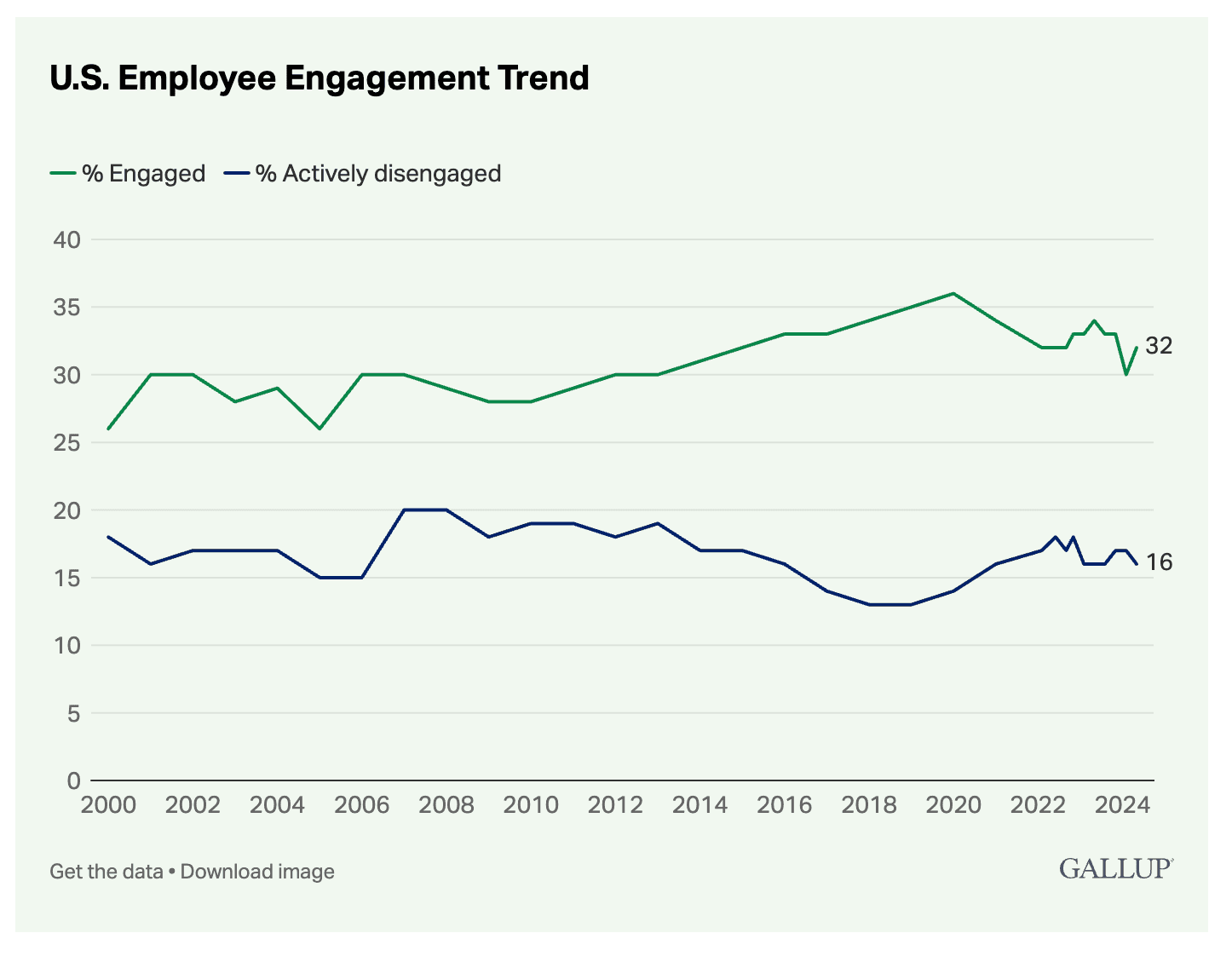
Source: Gallup. Only 32% of U.S. workers are engaged. 16% are actively disengaged. The gap hasn't meaningfully closed in 25 years.
The Manual

The word “sabotage” comes from the French sabot—a wooden shoe. Workers threw them into machinery. In 1944, the OSS took this idea and systematized it into the Simple Sabotage Field Manual, a guide for disrupting Axis organizations from within.
The manual's advice for organizational sabotage is eerily familiar: insist on doing everything through channels. Make speeches. Refer all matters to committees for further study. Bring up irrelevant issues as frequently as possible. Haggle over precise wordings. Refer back to matters already decided upon and attempt to re-open the question.
When possible, refer all matters to committees for “further study and consideration.” Attempt to make the committees as large as possible—never less than five.
When the CIA declassified this in 2008, people had the same uncomfortable reaction: this wasn't history—it was their Tuesday morning. We hadn't learned from it as a warning. We'd adopted it as best practice. We took a manual designed to destroy organizations and turned it into our operating system. Then we trained AI on the documentation from that world.
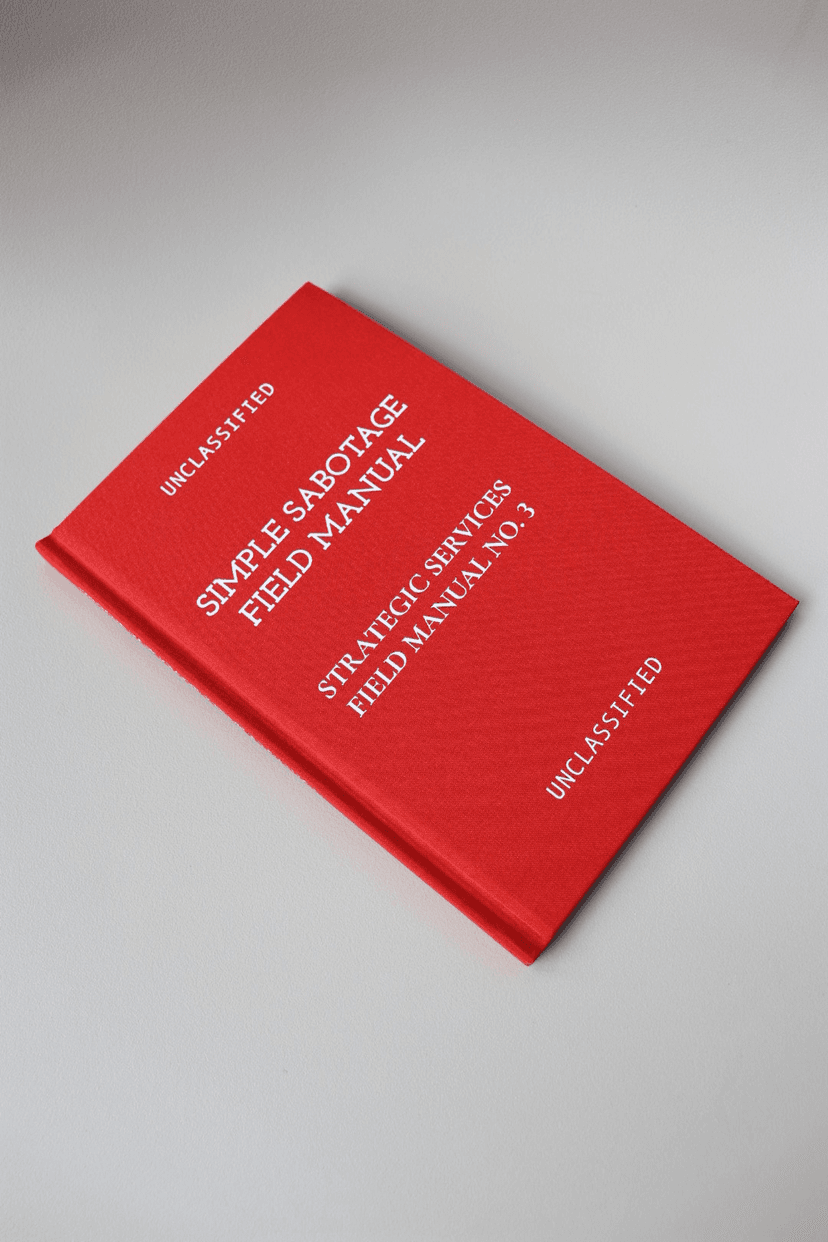
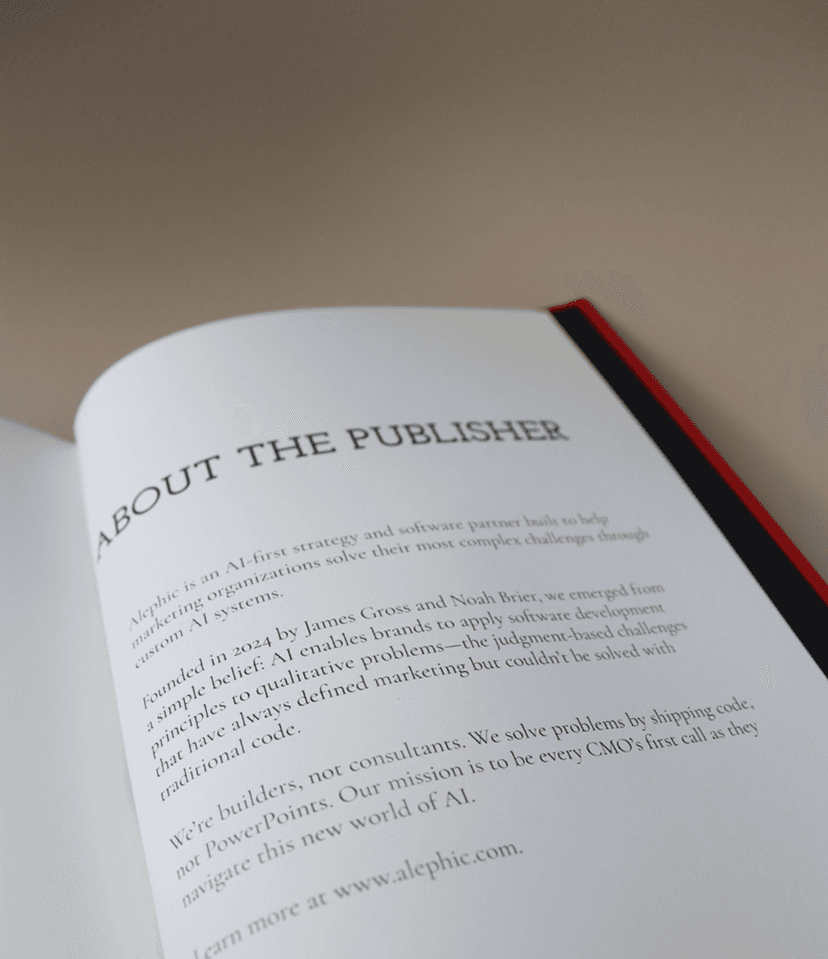
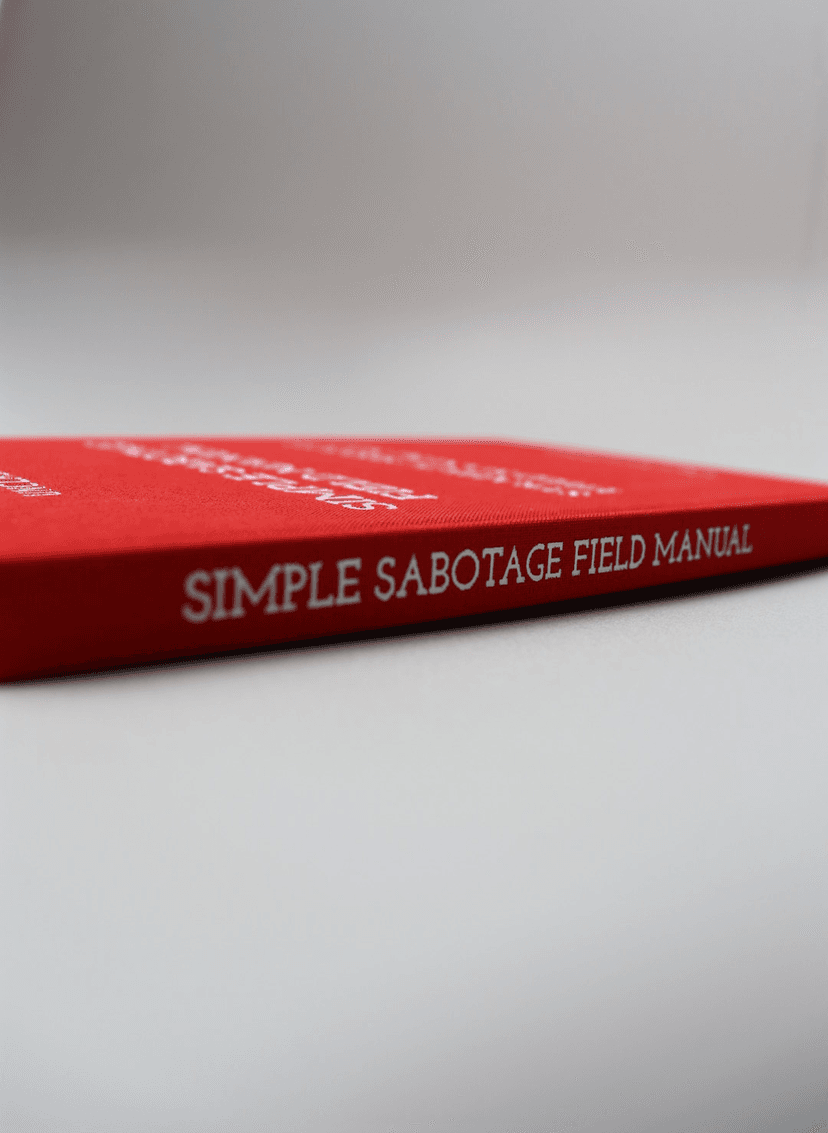
We're republishing the original 1944 manual as a physical book. Pre-order it here.
Builder Ratio
Tech companies have started tracking this with a metric called the “builder ratio”—the proportion of engineers and creators relative to managers and process roles. Amazon instructed every division to improve its IC-to-manager ratio by 15 percent. Microsoft launched parallel efforts.
If we do this work well, it will increase our teammates' ability to move fast, clarify and invigorate their sense of ownership, drive decision-making closer to the front lines where it most impacts customers.
They're not wrong, but they're only treating the symptom. Bureaucracy began as a rational safety mechanism—companies pivot from exploration to exploitation after finding product-market fit. Without vigilance, those safeguards become self-sabotage.
The Antidote

At BRXND LA, I talked about AI as superglue. Unlike SaaS—which demands you reshape your organization around its workflows—AI needs texture to bond. It latches onto existing processes and fills the gaps between disconnected systems.
The irony of the SaaS era is that tools meant to streamline operations created new bureaucratic layers. Each platform brought its own workflows, approval chains, incompatibilities. Their mirror became your mold.
I call this my “nooks and crannies” theory of AI: it's at its most potent when it's seeping into the cracks. All those bureaucratic processes, legacy systems, formatting rules, company-specific ways of doing things—they're not obstacles to AI adoption. They're the texture AI needs to grip onto. Companies that try to build AI in a clean room, stripping away all the messy context, are the ones whose pilots fail.
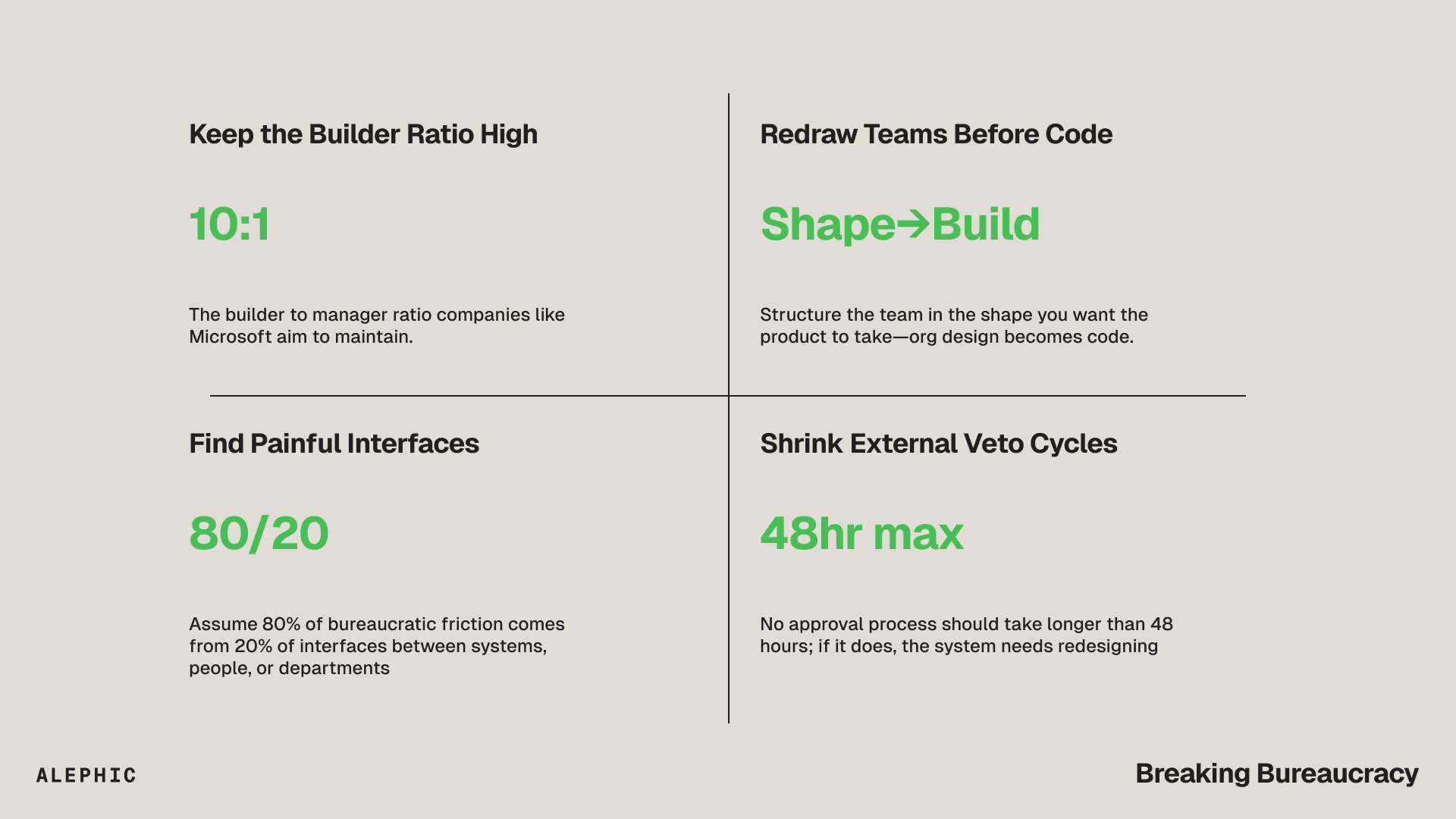
Anti-Sabotage
At BRXND LA I flipped the sabotage manual into what I called the “AI Simple Sabotage Sabotage Field Manual”—how to use AI to sabotage the sabotage.
Start at the bottom.Give everyone broad access before tackling hard problems. Most organizations do the opposite—they start with a “strategic AI initiative” requiring six months of planning. That's the sabotage manual talking.
Use your private tokens. Generic AI gives you median output. Your organizational knowledge is what moves you past it. But most of it is trapped in heads, buried in docs, or locked in tools that don't talk to each other.
Find the painful interfaces.Don't start with the most important process. Start with the most broken connection between two systems—the place where someone copies data from one tool and pastes it into another.
Just build. Stop planning. Start experimenting. Real understanding comes through doing, not through strategy decks about what you might do someday.
Related Reading
Further Reading
The Rise and Decline of Nations ↗
Mancur Olson's 1982 thesis on institutional sclerosis.
DocumentSimple Sabotage Field Manual (PDF) ↗
The original 1944 OSS document, declassified.
NewsletterBRXND LA 2025 Recap ↗
Sabotaging the sabotage — the AI anti-bureaucracy playbook.
BookAbundance ↗
Thompson & Klein on how administrative burdens create artificial scarcities.
“I used to think this was a failure of leadership or organizational design. Now I wonder if it's simply the price of coordination at scale—an unavoidable tax that grows with every person you add. Which brings us to an uncomfortable question: If bureaucracy is the price of scale, and scale is the price of impact, are we just rearranging deck chairs?”
— Noah Brier, Simple Sabotage Field Manual
Ready to sabotage the sabotage?
We build custom AI systems that cut through organizational complexity — not by adding another tool to the stack, but by making the ones you have actually work together.